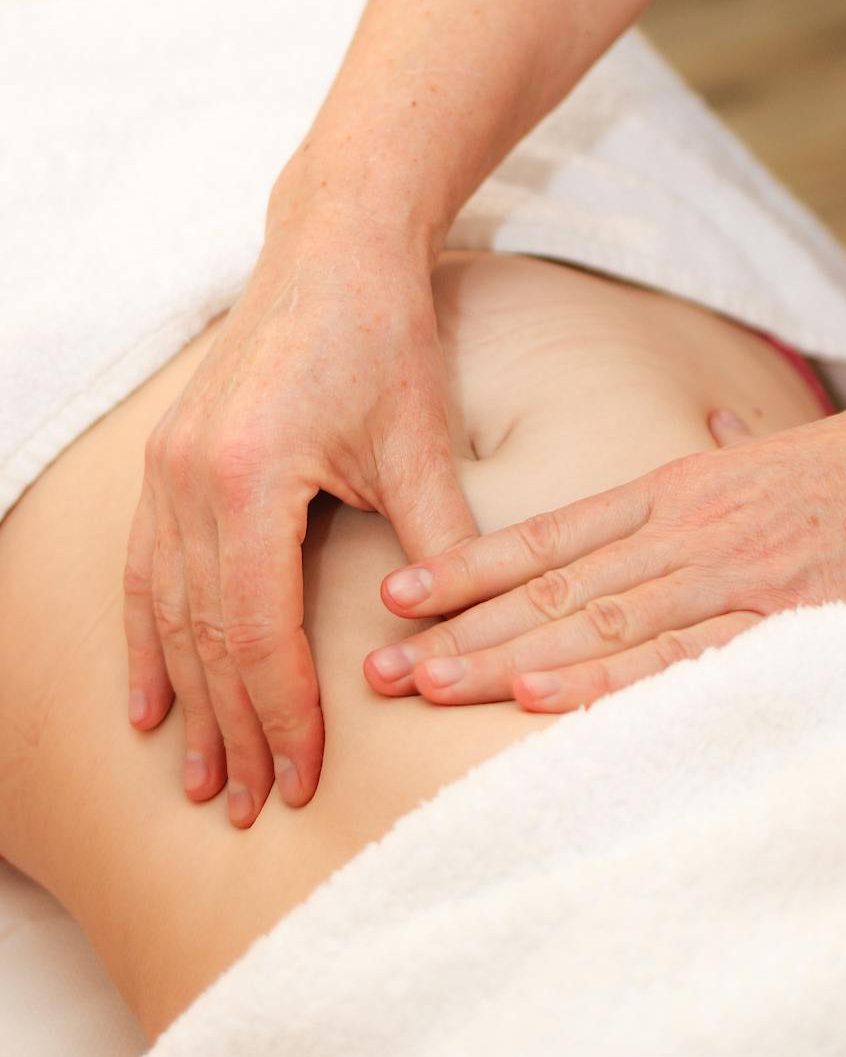
Oh, this is one of my favorite muscles. It’s deep, mysterious, and controversial. It’s like the occult conspiracy of soft tissues, many people have never heard of it, but it’s secretly affecting your posture, your comfort, and your freedom of movement. In my first specialty of Myofascial Massage Therapy, we learned to palpate and release this, the deepest muscle of the back, by reaching into the abdomen. I don’t use the technique terrifically often, because it’s not comfortable and not everyone wants me to reach quite that deeply into their body and soul.
Over the years, some have questioned not only the safety of working with the psoas,* but whether it is even possible to reach it. I’ve looked at the safety questions and taken the issues to heart, but I’ve always been confident that I can tell whether I’m “on” the psoas, or not.
The Thinking Practitioner is a podcast about issues in massage therapy by Til Luchau and Whitney Lowe, two experts whose opinions and analysis I’ve respected for many years. Their intended audience is massage therapists, so it may not be of interest to most people. But when I saw this installment, titled, “Can You Really Palpate the Psoas?” I had to hear it right away. I immediately began composing a response in my mind, to all the debunking they were probably going to do. I was pleasantly surprised to discover that the new MRI evidence suggests that, yes, we can probably get close enough to the muscle to apply effective techniques. Luchau and Lowe also talk about ways to work with psoas without compromising safety for the client.
You may be wondering at this point, why on earth would someone want this technique anyway? The primary reason is that it can be a major factor in low back pain. I can usually alleviate lumbar pain with other, less intense techniques, but when those fail, psoas work is often the secret trick that brings the relief a person needs.
I could talk a lot more about psoas. But maybe we could do that in person. If you’d like to try intensive work for lumbar pain, I would love to see what we can do together. If you’re interested in touch that suggests and allows, rather than tells the body what to do, let’s talk about Zero Balancing.
Contact me and we’ll talk soon.
*It’s so controversial, we don’t even agree on what its name is. Some consider it to be two or even three distinct muscles: iliacus, psoas major, and psoas minor. Others group those together and call them iliopsoas. In this post I’m following the lead of Luchau and Lowe, calling the muscle I work with simply psoas.
 Rachel Creager Ireland, LMT